
How to Choose the Right Keywords
If you’ve ever published a piece of content and watched it disappear into internet silence, the problem probably wasn’t your writing. It was your keywords. Choosing the right keywords is the foundation of any successful SEO or content strategy; get it wrong, and even brilliant content struggles to find an audience. Get it right, and you attract exactly the people searching for what you offer.
This guide walks through a practical, step-by-step approach to picking keywords that actually drive results.
Why Keyword Choice Matters So Much
Search engines match content to intent. When someone types a query into Google, they’re expressing a need for information, a product, or a solution to a problem. Your job is to figure out what words they’re using to express that need and then create content that speaks directly to it.
Choosing the wrong keywords leads to two common failures. First, you might target terms that are too competitive, where established sites with years of authority dominate the results, leaving your content buried on page five. Second, you might target terms with no real search volume, meaning nobody is actually looking for what you wrote. The sweet spot lies between these extremes: keywords with meaningful search interest and a realistic chance of ranking.
start With Your Audience, Not a Tool
Before opening any keyword research tool, spend time thinking about your actual audience. Who are they? What problem are they trying to solve? What language do they use to describe that problem not the industry jargon you might use internally, but the plain, everyday phrasing a real person types into a search bar.
For example problem,tware company might internally call their product “enterprise resource planning software,” but potential customers migbar?earch for “software to manage my small business inventory.” Understanding this gap between internal language and customer language is often the single biggest unlock in keyword research.
A useful exercise is to write down every question your customers ask you directly in emails, support tickets, sales calls, or social media comments. These questions are often near-perfect keyword candidates because they represent real intent from real people.
Understand the Three Types of Search Intent
Not all keywords serve the same purpose, and matching content to intent is critical. Broadly, keywords fall into three categories:
1. Informational keywords are used by people looking to learn something, such as “how does compound interest work” or “best time to plant tomatoes.” These keywords are great for blog posts, guides, and educational content.
2. Navigational keywords are used when someone already knows where they want to go, like “Nike running shoes official site.” These are less relevant for content marketing but matter for brand-specific SEO.
3. Transactional keywords signal an intent to take action or make a purchase, such as “buy waterproof hiking boots” or “best CRM software for startups.” These are high-value for e-commerce and product pages because the searcher is closer to converting.
Mapping your content to the right intent ensures you’re not writing a detailed educational article for a keyword where searchers actually want to buy something immediately, or vice versa
Use Keyword Research Tools Strategically
Once you have a list of candidate phrases based on audience research, it’s time to validate and expand them using tools. Options range from free tools like Google’s own Keyword Planner and Google Trends to paid platforms like Ahrefs, SEMrush, or Moz. These tools reveal:
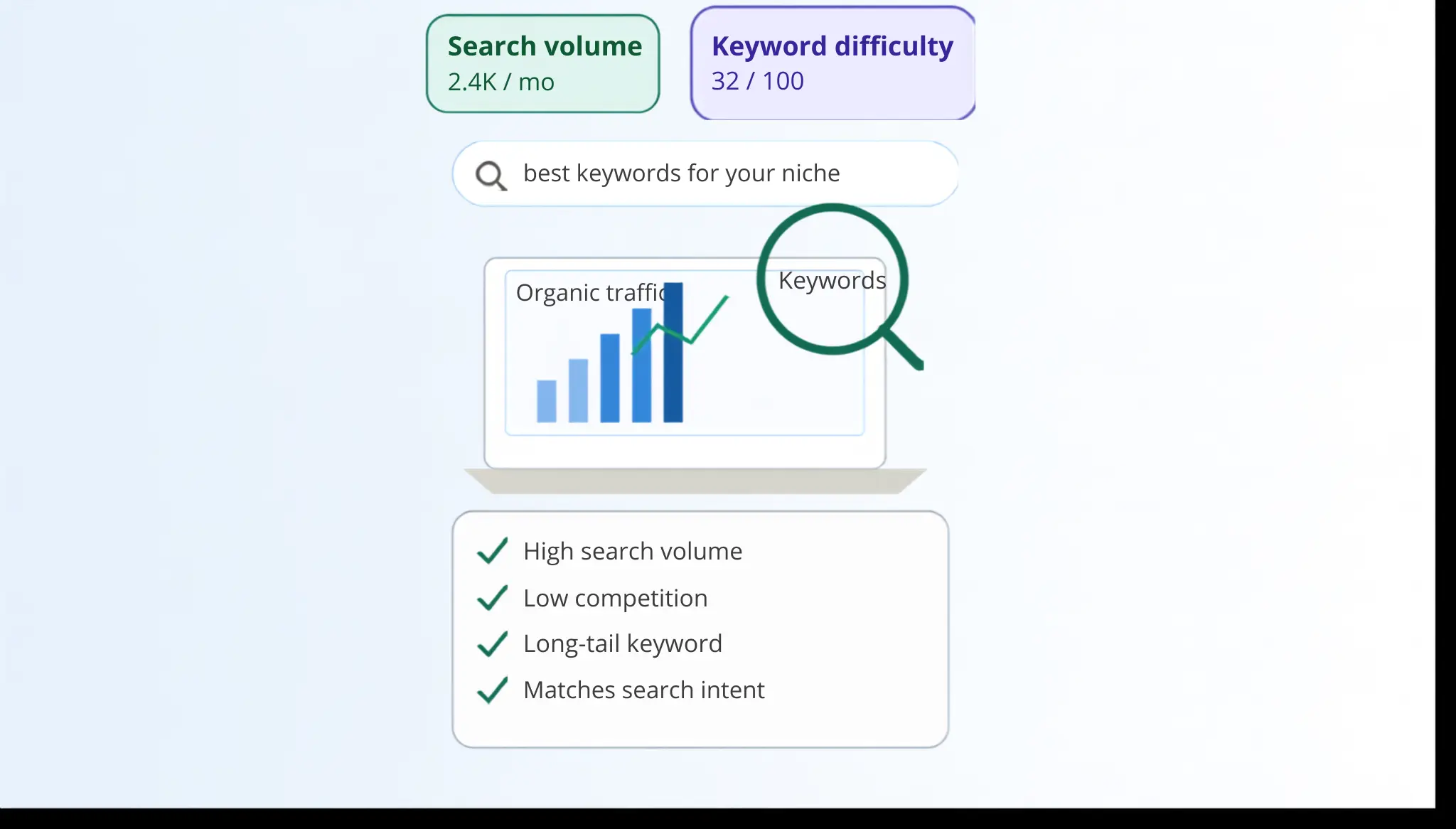
1. Search volume: roughly how many people search a term per month
2. Keyword difficulty: how hard it will be to rank, often based on the authority of pages currently ranking
3. Related keywords and questions: variations and adjacent phrases people also search for
4. Trend data: whether interest in a term is rising, falling, or seasonal
When reviewing this data, resist the temptation to chase only the highest-volume terms. A keyword with 500 searches a month that closely matches your offering is often more valuable than one with 50,000 searches a month that only loosely relates to what you do.
Consider Long-Tail Keywords
Long-tail keywords are longer, more specific phrases think “best running shoes for flat feet” rather than just “running shoes.” They typically have lower search volume individually, but three things make them powerful. They face far less competition, so ranking is more achievable. They convert better, because specificity signals a searcher who knows exactly what they want. And collectively, dozens of long-tail keywords across a site can add up to substantial traffic.
If you’re working with a newer website or limited authority, prioritizing long-tail keywords is often the fastest path to visible results.
Analyze the Competition
Before committing to a keyword, search it yourself and study the top-ranking pages. Ask what type of content is ranking is it blog posts, product pages, videos, or forums? What length and depth do these pages have? What subtopics do they cover that you might be missing?
This analysis tells you not just whether you can realistically compete, but also what your content needs to include to have a chance. If every top result is a 3,000-word comprehensive guide and you’re planning a 400-word post, you likely need to rethink your approach or your target keyword.
Prioritize Based on Relevance, Volume, and Difficulty
With your research complete, prioritize keywords using three factors:
1. Relevance to your business, product, or expertise
2. Search volume, weighed against how niche your audience is
3. Difficulty, based on your site’s current authority and the competition’s strength
A simple scoring system rating each keyword on these three factors from 1 to 5 can help you rank a long list objectively rather than relying on gut feeling alone.
Keep Refining Over Time
Keyword strategy isn’t a one-time task. Search behaviour shifts with trends, seasons, and even changes in how people phrase questions as voice search and conversational queries grow more common. Revisit your keyword list regularly, track how your content performs, and adjust based on what’s actually driving traffic and conversions.
Choosing the right keywords ultimately comes down to genuine curiosity about your audience combined with disciplined use of data. When you nail both, your content stops competing on search